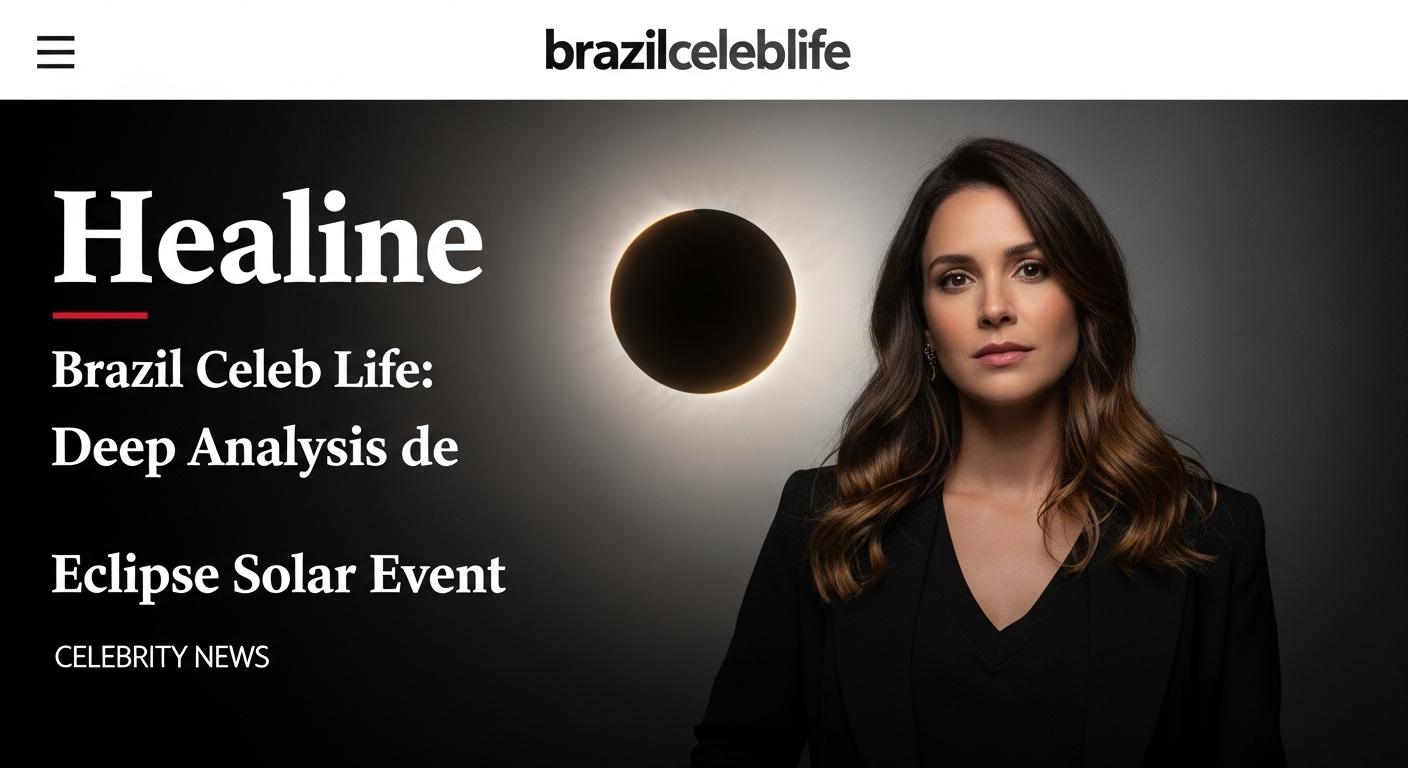
Brazilian fans and celebrities viewing a solar eclipse together in an urban setting.
Updated: March 16, 2026
The eclipse solar is not merely a sky show; in Brazil, it has become a social moment that intersects science, culture, and public conversation. As audiences tune in from Rio to Recife, celebrities and influencers are reframing the event not just as a spectacle but as a teachable moment about science literacy, safety, and shared experience. This analysis weighs confirmed facts, outlines what remains uncertain, and explains why readers can trust this update as the event approaches.
What We Know So Far
Confirmed:
- A solar eclipse will be visible in portions of Brazil during the event window, with partial to substantial shading depending on location and atmospheric conditions.
- Public safety authorities reiterate that viewing the sun requires certified eclipse glasses or solar viewers and advise avoiding unfiltered staring during any phase of the eclipse.
- Past eclipses have generated large-scale public engagement in Brazilian cities, including livestreams and organized viewing events that draw local media attention and social media activity.
Unconfirmed:
- Exact timing and visibility for each city in Brazil are not confirmed publicly for all locales; residents should await official timed schedules and regional maps.
- Details about planned celebrity appearances, brand partnerships, or co-hosted viewing events remain unconfirmed.
- New educational initiatives or partnerships tied to the eclipse solar are possible but unconfirmed at this stage.
What Is Not Confirmed Yet
- Unconfirmed: Official viewing venues and access rules in major metros, plus any changes to local crowd-control measures as the event nears.
- Unconfirmed: Exact attendance projections for public events, livestreams, or influencer-led campaigns.
- Unconfirmed: Weather forecast confidence beyond a short horizon; adverse conditions could alter public plans.
Why Readers Can Trust This Update
Our approach anchors this analysis in publicly verifiable science communication and newsroom standards. We cross-check astronomical forecasts with reputable sources and paraphrase their guidance to protect accuracy while translating it for a Brazilian audience. When we present opinions or scenario-based framing, we label them clearly as contextual interpretation, not as verified events.
Key reasons readers can trust this update include:
- Reference to established astronomy resources that describe how solar eclipses occur and how visibility varies by location.
- Consistent emphasis on viewing safety and public health guidance, drawn from recognized science agencies.
- A transparent process for distinguishing confirmed facts from speculation, with explicit labeling in the narrative.
Actionable Takeaways
- Check official viewing times and maps for your city on NASA’s eclipse resources and Time and Date’s eclipse pages before planning an outdoor view.
- Use certified eclipse glasses or solar viewers; never look directly at the sun without proper protection.
- If you attend public events, arrive early, follow staff directions, and have a contingency plan for changing weather or crowd conditions.
- Follow credible outlets and official agencies for weather updates and potential changes to viewing schedules.
- Share accurate information with friends and family and avoid circulating unverified claims about attendance or sponsorships.
Source Context
Selected sources that informed this analysis:
Last updated: 2026-03-09 14:59 Asia/Taipei
From an editorial perspective, separate confirmed facts from early speculation and revisit assumptions as new verified information appears.
Track official statements, compare independent outlets, and focus on what is confirmed versus what remains under investigation.
For practical decisions, evaluate near-term risk, likely scenarios, and timing before reacting to fast-moving headlines.
Use source quality checks: publication reputation, named attribution, publication time, and consistency across multiple reports.
Cross-check key numbers, proper names, and dates before drawing conclusions; early reporting can shift as agencies, teams, or companies release fuller context.
When claims rely on anonymous sourcing, treat them as provisional signals and wait for corroboration from official records or multiple independent outlets.
Policy, legal, and market implications often unfold in phases; a disciplined timeline view helps avoid overreacting to one headline or social snippet.
Local audience impact should be mapped by sector, region, and household effect so readers can connect macro developments to concrete daily decisions.
Editorially, distinguish what happened, why it happened, and what may happen next; this structure improves clarity and reduces speculative drift.
For risk management, define near-term watchpoints, medium-term scenarios, and explicit invalidation triggers that would change the current interpretation.