Exploring the Role of NFTs in Music
Non-fungible tokens (NFTs) have burst onto the scene as a novel way for artists to monetize their work and engage with fans. By minting music, album art, or exclusive content as NFTs, musicians can offer unique, verifiable ownership experiences to collectors and fans. This digital asset class has already seen high-profile releases from artists like Kings of Leon, who released an album as an NFT, setting a precedent for future innovation.
NFTs are reshaping how artists think about intellectual property and ownership, offering a new revenue stream while also providing fans with a sense of exclusivity and direct support for their favorite musicians. However, this trend is still in its infancy, with questions about environmental impact and market volatility needing to be addressed.
Globalization and Cultural Exchange in Music
The globalization of the music industry has paved the way for a rich cultural exchange, where artists from different regions collaborate and share influences. This cross-pollination has led to the creation of new genres and sounds, such as Afrobeat’s global rise or the fusion of Eastern and Western musical elements.
Platforms like YouTube and SoundCloud have made it easier for artists from diverse backgrounds to reach international audiences. As a result, listeners are exposed to a broader array of musical expressions, fostering greater cultural understanding and appreciation.
The Importance of Mental Health Awareness in the Industry
As the music industry evolves, there is an increasing focus on the mental health of artists. The pressures of fame, relentless touring schedules, and the demands of creativity can take a toll on musicians’ well-being. Recent years have seen more artists speaking out about their mental health struggles, advocating for greater awareness and support.

Initiatives are being developed to provide mental health resources and support systems for artists, ensuring they have the tools to manage stress and maintain their well-being. This shift towards prioritizing mental health is crucial for fostering a sustainable and healthy music industry.
Virtual Reality and Augmented Reality in Live Performances
Virtual reality (VR) and augmented reality (AR) technologies are transforming live music experiences, offering fans immersive and interactive concerts from the comfort of their homes. Artists are increasingly incorporating VR and AR elements into their performances, creating visually stunning and engaging shows that push the boundaries of traditional concerts.

These technologies allow artists to experiment with new storytelling techniques and create unique visual worlds, enhancing the overall concert experience. As VR and AR continue to advance, they hold the potential to redefine how we experience live music, making it more accessible and innovative.
Takeaways
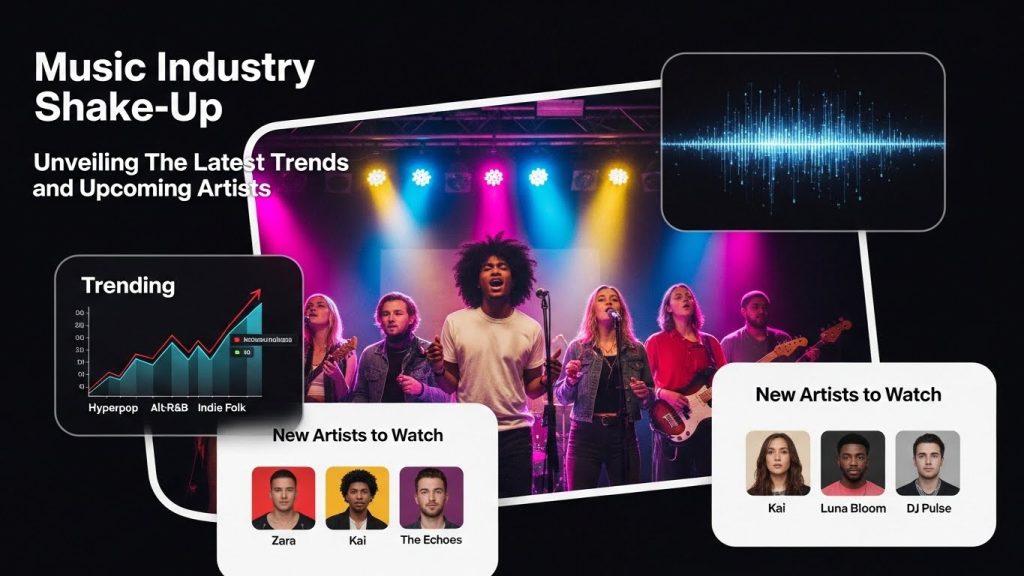
In conclusion, the music industry is in a state of exciting transformation, driven by technological advancements, changing consumer behaviors, and a surge of new talent. While challenges such as fair compensation and mental health concerns persist, the opportunities for innovation and growth are abundant. As artists and industry professionals navigate this evolving landscape, they continue to push creative boundaries and redefine the role of music in our lives.
The future of the music industry is bright, with endless possibilities for new sounds, collaborations, and experiences. As we embrace these changes, we can look forward to a dynamic musical landscape that continues to inspire and connect people across the globe.
About the Author